How Ancient Seafloors Became Rock, Soil, and Land
It is easy to look at a limestone cliff or a shale outcrop and forget that it was once loose mud or sand sitting quietly on an ancient seafloor. But that transformation, from soft sediment to solid rock, and sometimes eventually to soil, is one of the more remarkable processes in geology, and it is central to understanding where fossils like trilobites actually come from.
Sediment: The Starting Material
Ancient seafloors, like modern ones, were covered in sediment: mud, silt, sand, and dissolved minerals carried in by rivers, generated by the breakdown of existing rock, or produced by marine organisms themselves. This sediment built up in layers over time, one deposit settling on top of the last.
From Loose Sediment to Solid Rock
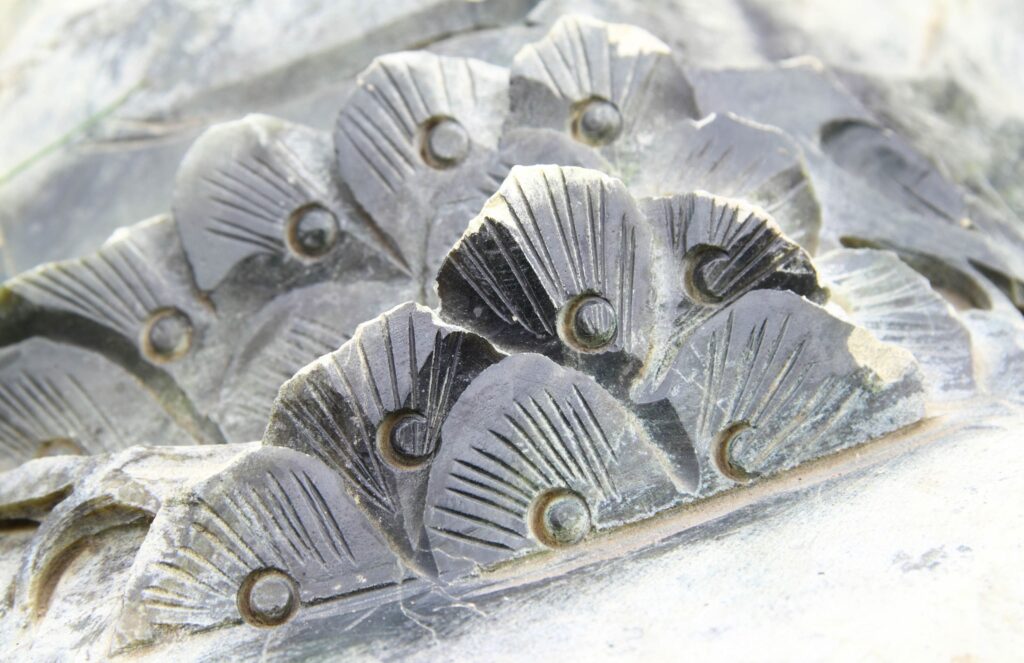
Turning loose sediment into solid rock is a process geologists call lithification, generally happening through compaction and cementation. As layers of sediment pile up, weight compresses lower layers, squeezing out water. Over time, dissolved minerals precipitate out and cement particles together. The result is sedimentary rock: limestone from lime-rich mud, shale from compacted fine mud, sandstone from compacted sand.
This is why sedimentary rock layers, and the fossils inside them, are typically found stacked in a particular order, older layers on the bottom, newer layers above, a principle central to stratigraphy.
From Rock to Soil
Once rock is exposed at the surface, through uplift or erosion, it becomes subject to weathering: the slow physical and chemical breakdown caused by water, temperature changes, wind, and biological activity. Over long periods, that weathered rock combines with organic matter to form soil.
Why This Cycle Matters
This cycle, sediment to rock, rock to soil, gives context to everything from the fossils we find to the landscapes we live in.
Continue with From Ancient Oceans to Modern Landscapes, or read What Were Trilobites and Where Did They Live?