What Were Trilobites and Where Did They Live?
If you have spent any time around fossils, you have probably come across a trilobite. With their segmented, armor-like bodies and often striking, symmetrical shape, they are some of the most recognizable and widely collected fossils in the world. But what were they actually, and what kind of world did they live in?
What Trilobites Were
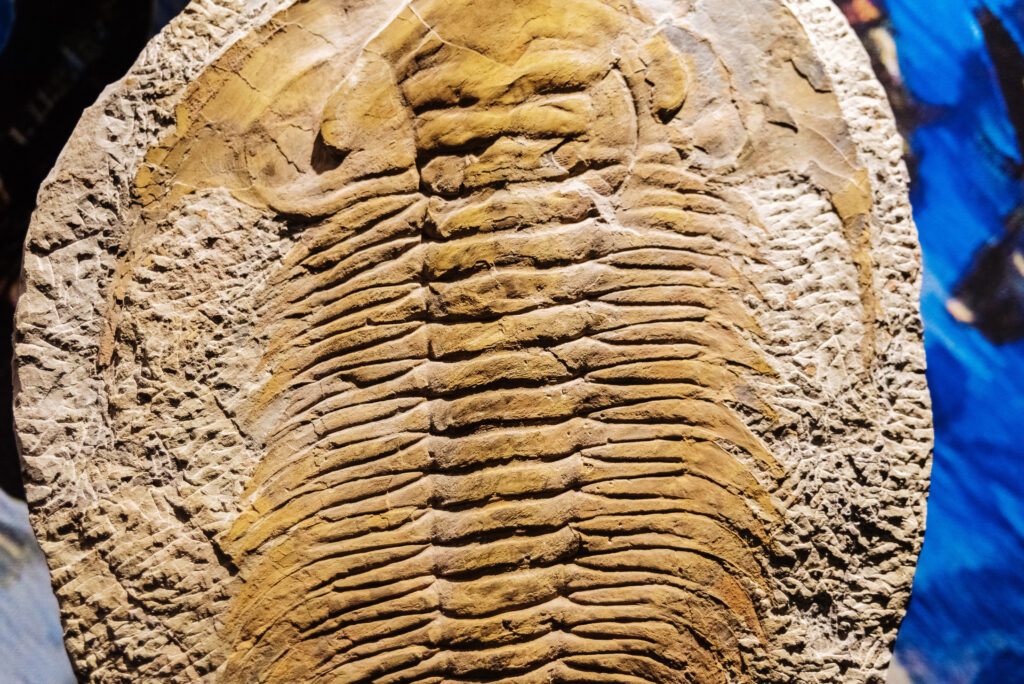
Trilobites were marine arthropods, distant relatives of modern creatures like crabs, insects, and horseshoe crabs, though trilobites themselves left no direct living descendants. Their name comes from the three-lobed structure running the length of their body: a central axial lobe flanked by two side lobes. Most had a hardened exoskeleton made of calcite, which is a big part of why they preserve so well as fossils compared to soft-bodied ancient animals.
Trilobites were not a single species but an enormously diverse group, with thousands of known species varying widely in size, shape, and lifestyle.
Roughly When They Lived
Trilobites existed for an extraordinarily long stretch of geological time, appearing in the Cambrian period and persisting all the way through to the end of the Permian period, a span of a few hundred million years. Because they existed across so much time, and evolved so much along the way, trilobite fossils are especially useful for helping geologists understand the relative age of the rock layers they are found in.
The Ancient Seas They Called Home
Trilobites were exclusively marine animals, living in ancient oceans and, especially, shallow shelf seas: the relatively shallow, sunlit waters that once covered large areas of what are now continents. When a trilobite died and was covered by mud, sand, or fine sediment on the seafloor, it had a much better chance of being preserved than if it had simply decomposed on an open seabed.
Why This Matters Beyond the Fossil Itself
Understanding where trilobites lived is not just background trivia. It is a window into what the seafloor, sediment, and water chemistry were like at that place and time.
Continue with How Ancient Seafloors Became Rock, Soil, and Land, or return to the Weeks Trilobites homepage.